
Custom Signage Production That Performs
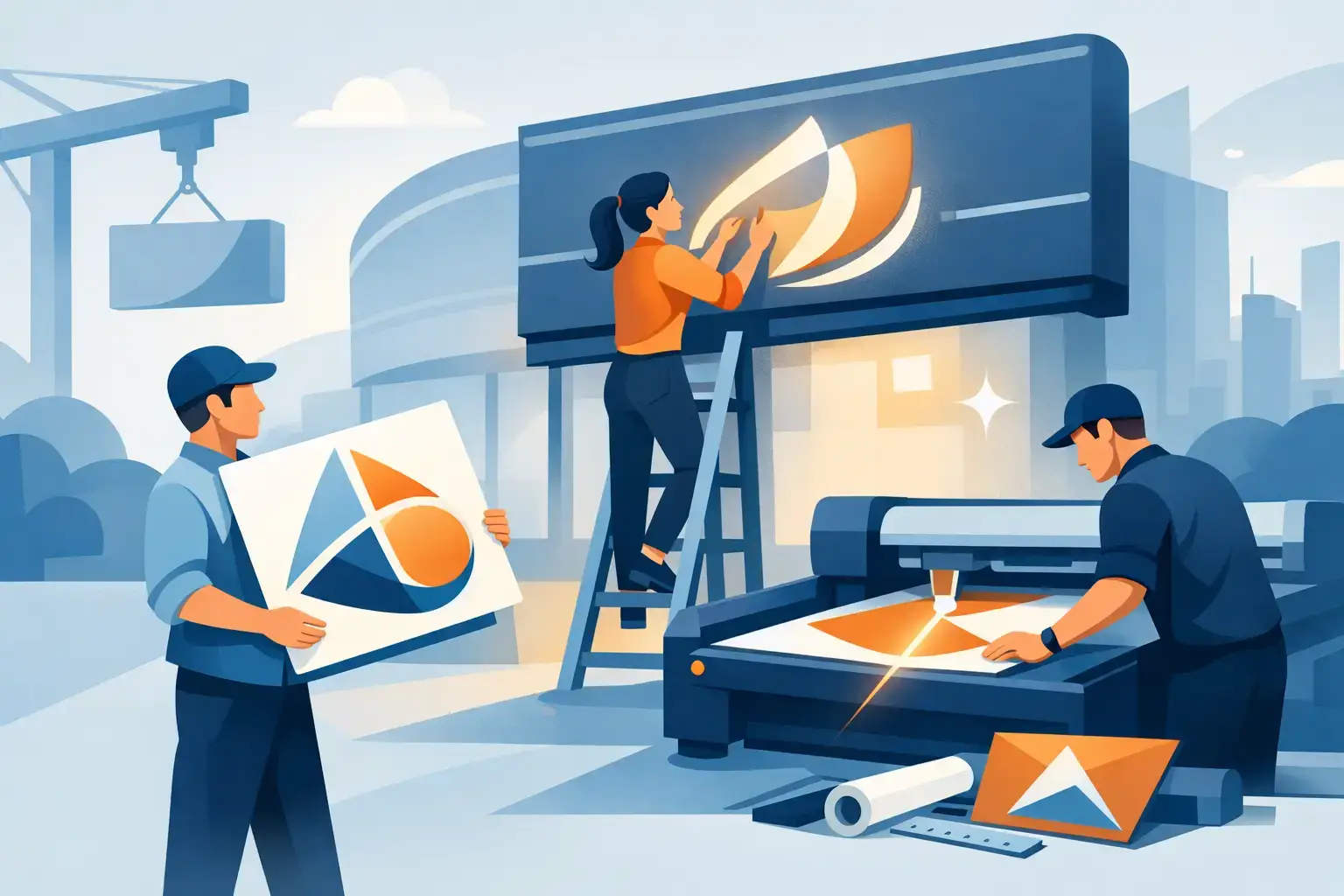
A sign usually gets judged in three seconds. From the sidewalk, from a moving car, from across a lobby, from the entrance to a trade show booth – people decide fast whether it looks credible, premium, forgettable, or off-brand. That is why custom signage production is not just a fabrication task. It is a brand execution process where design intent, engineering, materials, finish quality, and installation all have to work together.
For architects, developers, retail teams, agencies, and event producers, the real challenge is rarely coming up with a sign concept. The challenge is getting that concept built without losing sharpness, scale, color accuracy, structural integrity, or delivery timing. This is where production discipline matters.
What custom signage production actually includes
The phrase covers far more than printing a logo onto a panel. Depending on the project, custom signage production can involve 3D modeling, shop drawings, material testing, prototyping, CNC cutting, laser cutting, formed letters, acrylic fabrication, metalwork, resin casting, fiberglass work, paint systems, lighting integration, and final mounting strategy.
That range matters because not all signs are trying to do the same job. A reception logo wall has different demands than exterior wayfinding. A luxury retail sign needs different finish standards than an event backdrop meant for a three-day activation. A developer marketing suite may prioritize visual impact and fast turnaround, while a permanent public installation has to handle weather, cleaning, UV exposure, and heavy foot traffic.
When those use cases get treated as if they are interchangeable, quality problems show up quickly. Materials warp. Colors shift under lighting. Mounting points become visible. Letter edges look rough at close range. Finishes fail long before they should.
Why signage projects fail before fabrication starts
Most signage issues begin upstream. The file may look clean on screen but ignore wall conditions, viewing angles, load requirements, tolerances, or how the sign will actually be installed. A beautiful render is not the same as a production-ready design.
That gap is where many projects lose time and money. One vendor handles concept design, another interprets it for manufacturing, another sources materials, and another installs it on site. Every handoff introduces assumptions. If nobody owns the full chain, small errors compound.
A dimensional logo is a good example. Letter thickness affects shadow lines. Material choice changes edge quality. Surface finishing affects how light reflects. Mounting method determines whether the final result appears to float cleanly or sit awkwardly off the wall. None of those decisions are minor if the sign is going into a flagship showroom, hospitality space, leasing office, or branded corporate environment.
This is why integrated production tends to outperform fragmented sourcing. When design, prototyping, fabrication, finishing, and installation planning are aligned early, the outcome is more predictable and usually stronger.
The material decision is never just aesthetic
In custom signage production, materials do two jobs at once. They shape the visual character of the sign, and they determine how the sign behaves over time.
Acrylic can deliver crisp edges, clean color, and polished dimensionality. Metals can communicate permanence, precision, and premium value. Fiberglass and resin open up sculptural forms that would be difficult or expensive to achieve through conventional flat fabrication. CNC-machined components bring consistency and repeatability, especially when the geometry is more technical. Painted finishes can match brand systems closely, but they need the right substrate preparation and topcoat specification if the sign will face heat, sun, or regular handling.
There is no universal best material. Interior feature signage may prioritize surface quality and detail resolution. Exterior signage may need weather resistance, structural reinforcement, and finish systems built for harsh conditions. In places like the UAE, Saudi Arabia, Qatar, and Oman, climate exposure is not a side note. Heat, UV, dust, and installation environment all affect what will hold up and what will degrade faster than expected.
The smart question is not, “What material looks best?” It is, “What material gives this sign the right appearance, lifespan, and production efficiency for its actual use?”
Precision changes how a brand is perceived
People rarely describe signs in technical terms, but they notice technical quality immediately. They see whether edges are sharp. They notice whether spacing feels intentional. They pick up on whether the finish is smooth, whether the logo proportions feel right, whether illuminated elements are even, and whether installation looks clean.
That is what makes signage such a high-leverage brand asset. It sits in public view and quietly communicates how seriously a business takes detail. For a luxury brand, real estate destination, hospitality venue, museum, automotive space, or premium commercial interior, poor signage undercuts the environment around it.
High-quality custom signage production creates the opposite effect. It gives the space authority. It makes branding feel built into the architecture instead of applied as an afterthought. It supports wayfinding without looking generic. It turns a logo into an object with presence.
Prototyping saves more than time
In complex signage work, prototyping is often treated as optional until something goes wrong. In practice, it is one of the most useful parts of the process.
A prototype can test scale, readability, finish quality, lighting behavior, material thickness, and assembly logic before full production begins. That is especially valuable when the sign includes custom forms, premium finishes, integrated illumination, or unusual mounting conditions. It is also helpful when agencies or client teams need to sign off with confidence rather than relying on renders alone.
The benefit is not only fewer mistakes. Prototyping also improves decision-making. Teams can compare finishes in real light, adjust dimensions for stronger visibility, and catch manufacturing constraints while changes are still inexpensive.
For large rollouts or multi-location branding programs, that early validation becomes even more important. One approved prototype can establish a repeatable production standard across many sites.
How custom signage production supports different project types
The best signage workflows change depending on the environment. A retail rollout needs consistency across locations, but also realistic lead times and install planning. An event installation may demand bold visual impact under intense schedule pressure. An architectural sign package has to work with materials, circulation, code considerations, and the surrounding built environment.
Branded interiors often benefit from dimensional fabrication, layered materials, backlit elements, and finishes that align with the full design scheme. Public-facing installations may require structural consideration and durable materials that can withstand long-term exposure. Marketing suites and exhibitions often need signs that feel premium on camera and in person, even when timelines are compressed.
That is why capability range matters. A studio that can move from digital modeling to CNC cutting, laser cutting, fiberglass fabrication, casting, finishing, and installation planning is in a stronger position to solve the actual problem instead of pushing every project toward the same limited set of methods.
Choosing a production partner for custom signage
If the project is high-visibility, the selection criteria should go beyond price and sample photos. The better questions are operational.
Can the team translate concept design into production-ready details? Can they recommend materials based on lifespan, environment, and finish expectations? Can they prototype when needed? Do they control critical fabrication and finishing processes in-house? Can they coordinate installation requirements early instead of treating them as a final hurdle?
This matters because signage quality is cumulative. Strong results come from many small decisions executed well – file preparation, tolerances, joinery, surface prep, paint application, lighting access, packaging, transport, and site coordination. Weakness in any one stage can show up in the final piece.
That is one reason integrated studios such as 3Distica are valuable on complex signage builds. When the same partner can design, prototype, fabricate, finish, and prepare for installation, the project moves with fewer interpretations and stronger quality control.
Where the real value shows up
Good signage is visible. Great signage is reliable. It arrives looking the way it was intended to look, fits the site, holds up under use, and supports the brand every day after installation.
That is the practical value of custom signage production done properly. It reduces revisions, protects design intent, improves durability, and gives commercial spaces, activations, and architectural environments a stronger physical identity.
If a sign has an important job to do, treat it like a built product, not a last-minute graphic. The difference shows immediately, and it stays visible for a long time.