
Branded Display Fabrication That Performs
A display has seconds to do its job. On a retail floor, at a launch event, inside a showroom, or across an exhibition stand, the difference between being noticed and being ignored usually comes down to execution. That is where branded display fabrication earns its value – not as a decorative afterthought, but as the physical system that turns brand strategy into something people can actually see, approach, photograph, and remember.
For brand teams, agencies, architects, and event producers, the challenge is rarely just coming up with a strong concept. The real pressure sits in translating that concept into a finished object or environment that looks sharp in person, survives handling, respects timelines, and still reflects the original creative intent. That translation is where many projects lose quality. Files move between designers, fabricators, finishers, installers, and last-minute fixes start replacing good planning.
What branded display fabrication really includes
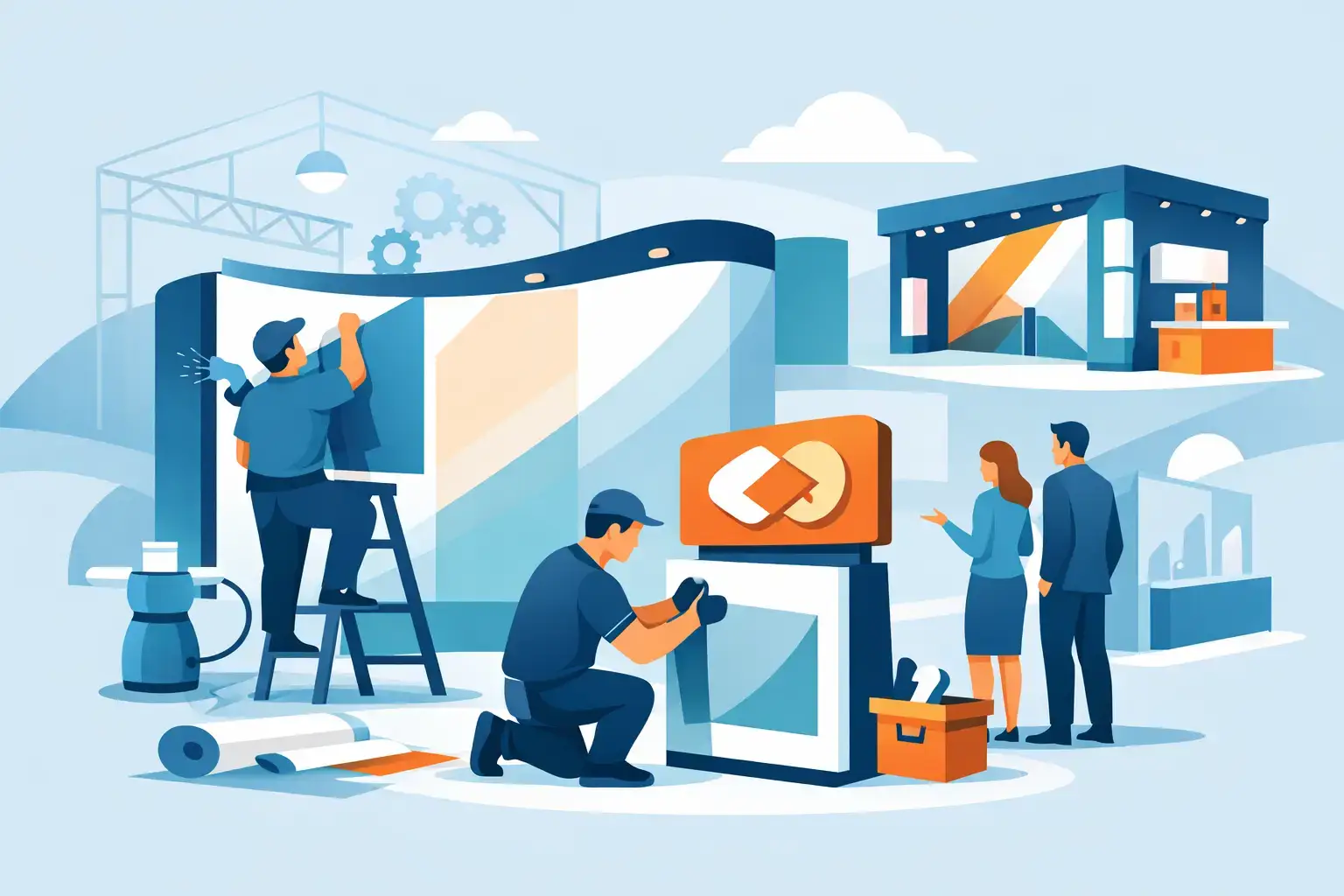
Branded display fabrication covers far more than printing a logo onto a structure. It includes the design development, material selection, prototyping, engineering, manufacturing, finishing, graphics integration, packing, delivery, and often installation of custom-built brand elements.
Those elements might be product plinths, retail fixtures, point-of-sale displays, oversized props, branded wall features, exhibition components, wayfinding, podiums, promotional structures, or full experiential environments. Some projects are temporary and campaign-driven. Others need to stay in place for years and tolerate constant public interaction.
That distinction matters because a display built for a three-day activation should not be engineered the same way as a permanent branded environment in a corporate lobby or sales center. Good fabrication starts by asking how the piece will be used, where it will live, who will interact with it, and what level of finish the brand actually needs.
Why branded display fabrication fails when teams split the process
One of the most common problems in display production is fragmentation. A creative team develops visuals, one vendor handles prototyping, another fabricates the structure, another applies graphics, and a separate contractor installs on site. On paper, that looks manageable. In practice, it introduces handoff risk at every stage.
Dimensions shift. Materials get substituted. Surface finishes no longer match the approved render. Logos sit slightly off-axis. Transport requirements were never factored into the build. Installation crews inherit parts that were not designed for the site conditions. None of these issues are dramatic on their own, but together they dilute the final result.
Integrated production reduces that risk. When the same team can handle design translation, fabrication planning, finishing, and delivery, the display benefits from tighter tolerances and faster decisions. It also becomes easier to protect the visual intent of the concept while solving practical manufacturing problems early instead of on site.
For complex commercial work, that integration is often what separates a display that looks expensive from one that actually is expensive for all the wrong reasons.
The materials decision changes everything
Material choice is not just a technical conversation. It directly affects visual impact, weight, cost, durability, and installation complexity.
A high-gloss painted MDF plinth may produce a clean premium appearance for an indoor launch, but if the display needs repeated transport, CNC-cut composite panels or reinforced structures may offer better longevity. Acrylic can deliver crisp branded detailing and controlled light diffusion, while fiberglass is often the smarter route for sculptural forms, curved surfaces, or oversized branded objects. Resin casting may be ideal for repeat elements with consistent geometry. Laser-cut components can bring precision to layered graphics and signage details.
There is no universal best material. The right answer depends on whether the priority is speed, budget, surface finish, structural strength, transport efficiency, or reusability. Experienced fabrication teams know when to combine processes instead of forcing one material to do everything.
That is especially relevant for premium branded work, where the eye reads quality immediately. Edge conditions, joint lines, paint consistency, and surface texture all communicate something about the brand, whether intended or not.
Prototyping is where expensive mistakes get prevented
In branded environments, a digital render can be persuasive and still be misleading. Scale feels different in person. Graphics that seem balanced on screen may look crowded once wrapped onto a physical object. A form that appears simple in CAD may require hidden reinforcement or revised assembly methods.
Prototyping closes that gap. Sometimes that means a full-size sample of a hero element. In other cases, it means a scaled 3D print, a material mockup, or a finish test panel. The point is not to add process for its own sake. It is to make sure the project reaches fabrication with fewer assumptions.
For agencies presenting to clients, prototypes also make approvals more meaningful. Instead of approving a concept in abstraction, stakeholders can evaluate actual proportions, textures, and branding details before production ramps up.
This is where an execution-driven studio has an advantage. If prototyping and fabrication sit under one roof, learning from the prototype feeds directly into the production method instead of getting lost between separate vendors.
Precision matters, but so does finish
A display can be perfectly measured and still fail visually. Branded display fabrication lives at the intersection of engineering and presentation. The structure needs to work, but it also needs to look resolved under real lighting, at close viewing distance, and often on camera.
That is why finishing deserves as much attention as fabrication. Paint systems, laminates, vinyl application, clear coats, metallic treatments, edge refinement, and graphic alignment all shape the final impression. A luxury brand display and a high-energy product launch may require completely different finish strategies even if the base structure is similar.
There is also a practical side to finish selection. Matte surfaces may photograph better in some environments but mark more easily. Gloss can feel premium but highlight imperfections. Textured coatings can improve durability while changing color perception. These are not minor details. They affect how the display performs in use.
Speed matters, but rushed fabrication has a price
Many branded display projects are driven by hard launch dates, exhibition openings, or campaign timelines. Speed is valuable, but it only helps if the production workflow is built for it.
When timelines tighten, the temptation is to skip development steps and move straight into fabrication. Sometimes that is necessary. More often, it creates rework that costs more time than it saves. Smart fast-track production comes from parallel planning – design refinement, material sourcing, prototyping, and fabrication prep moving in coordination rather than in sequence.
This is one reason clients working across the UAE, Saudi Arabia, Qatar, and Oman often prioritize full-service production partners for display programs and branded installations. Regional logistics, site access, and delivery timing can add pressure quickly. A fabrication team that already understands how to design for transport, assembly, and installation reduces avoidable friction.
What buyers should ask before approving a display build
If you are commissioning a branded display, the right questions are usually more valuable than the lowest quote. Ask how the structure will be manufactured, what materials are being proposed and why, how branding will be integrated, what tolerances matter, how the display will be packed, and whether it is designed for one use or repeated deployment.
Also ask who is responsible for the final fit and finish. That answer tells you a lot about where quality control lives. If every phase belongs to a different supplier, accountability becomes blurry the moment something shifts.
For complex activations, retail programs, or architectural brand elements, it is also worth asking whether the partner can prototype, fabricate, finish, and install internally. The fewer blind handoffs in the chain, the more predictable the result.
A capable studio like 3Distica brings value here not just through equipment, but through coordination across 3D design, machining, fabrication, finishing, and delivery. That kind of range is not a nice extra. It is often what protects ambitious concepts from being simplified into something safer and less effective.
Branded display fabrication as a business tool
The best displays do more than look impressive. They guide attention, reinforce positioning, support sales conversations, and create physical moments that digital campaigns cannot replace. When fabrication is handled well, the display becomes part of the brand system rather than a standalone prop.
That is why branded display fabrication should be treated as a strategic production discipline. It sits between idea and impact. It determines whether a concept arrives in the real world with authority, accuracy, and enough presence to justify the investment behind it.
If a display needs to carry a brand in public, it deserves more than quick assembly and good intentions. It deserves a build process strong enough to make the concept hold up when people are standing right in front of it.